Where Can You Find The Most Effective Hobs Information?
What is a Hob? The hob is a vital part of every kitchen. Modern hobs are made of glass which is heatproof and shatterproof. They also have flat cooking zones that are easy to clean. They use electric energy but are less expensive than gas hobs. They also work with almost all cookware brands, but induction hobs require compatible pans that emit magnetic fields. Origin Hob is an English masculine name that has been used since the Middle Ages. It is akin to the Old English word “hol” and refers to a hole, pit, or dent. The name is also derived from the Anglo-Saxon term “hod”, which means the word “crag” or hill, or a crag. Folklore suggests hobs are faery spirits who help with household chores. They are usually benevolent however they can also be a nuisance if they are upset. One of them was the hobthrush of Runswick Bay in North Yorkshire which was believed to cure whooping cough. Another common use of the word is to refer to a kind of cooking device. A hob is a metallic plate used to cook food and heat liquids. The top of the plate is typically flat, and has several cooking elements like rings. In some instances, the hob is replaced by a flat rock that can be used as a quoits goal. The earliest documented instances of the term hob go to the 16th century. It was probably acquired in the same time frame as the feminine form hobgoblin. It originates from the medieval diminutive of Robert or Robin Goodfellow, who were famous fairy tales and domestic spirits. Hobs are famous for their games, despite their harmless nature. They can also be very destructive if provoked. One hob in Lincolnshire for instance, was able put a cart onto its roof. This was a major issue for the farmer. They are also difficult to use due to their speed and strength. Although hobs are mainly found in the UK they can also be used in other countries. Hobs with electric and gas are available. They can be controlled by one button and are compatible together with other kitchen appliances. Additionally, some stoves can connect to Wi-Fi or Bluetooth making them more convenient to use. These kinds of features are attracting buyers to buy these devices. best hob uk have advanced safety features like a lock for children. Functions Induction hobs have a reputation for rapid heating, energy efficiency, and precise temperature control. Their glass-ceramic surfaces stay cool to the touch and are heated only when they come into contact with compatible cookware, which minimizes the risk of burning. The power is also shut off instantly when the cookware leaves the cooking zone. best hob uk are particularly beneficial in homes, where children and guests are likely to be in the kitchen. Induction hobs use less gas than stovetops that are traditional. This helps lower the cost of energy for households and carbon emissions. This makes them ideal for environmentally-conscious households. Certain models come with the 'Stop and Go' function, which instantly reduces all cooking zones to the lowest setting for convenience when you must leave the kitchen. Some models feature bridge features that connect two induction zones into a large zone that is controlled by a single control. This gives you more flexibility. The capability to connect multiple cooking zones also allows you to cook using larger or unusual-sized pans and pots. The power settings on a hob can be adjusted using simple easy-to-use controls that are easy to operate and read. Some also have timers, presets for the most common cooking functions, automatic switch-off, a 'Booster' feature that draws maximum power for the amount of time, and an 'underside heat' that is gentle to speed up simmering and conserve energy. The smooth, glass-ceramic-like surface on an electric hob makes it easy to clean. It also does not have the nooks and crannies which can accumulate dirt over time, like traditional gas burners. Fotile electric hobs were designed to add elegance and class to modern kitchens. They feature sleek, contemporary lines to complement other appliances and décor. Sensors are utilized in hobs that have automatic shut-off features. They scan the surface of the hob for indications of unusual heat, or explosive substances. The gas supply is then automatically shut off to avoid injury and fire. This feature is especially important for gas hobs as it mitigates the risk of accidents during cooking. Induction hobs utilize sensors to know the cookware isn't in contact it. This will prevent electric shocks. Types There are a myriad of types of hobs that are available. It's important to choose the right one for your kitchen. Common features include: heat control energy efficiency, cookware compatibility and safety. The type of hob you choose will also impact your budget, both the initial cost and also the running costs. Gas hobs make use of natural gas to create an open flame that warms your pots and pans. Many cooks at home choose them because they provide instant heat and can be set to a precise temperature. They are also not affected by power failures and can be used with a wide variety of cooking equipment. However, gas hobs can be more expensive to run and require regular maintenance, like cleaning the grates. Additionally, they could be more prone to flare-ups due to accident, so you need to be aware of the flame's presence and ensure that the stove is adequately protected with protective grilles. Plate hobs are yet another traditional kitchen appliance that utilizes electric elements under glass or ceramic surfaces to heat your cookware. These hobs are economical and provide a good heat distribution for flat-based items. They are more difficult to cool and heat than other types of hobs and aren't easy for cleaning. Halogen hobs are similar to electric plates, however they have a filament bulb that creates heat on the surface. They are more efficient in energy use however they require more time to cool down or heat off. Ceramic hobs are more flexible in terms of temperature control, with some featuring touchscreen controls, while others have physical knobs that you can turn. Induction hobs are an innovative alternative to traditional stovetops, employing electromagnetic induction to warm your cookware. This technology is more efficient than other types of hobs, which results in quicker heating and a more uniform heat distribution. Induction hobs also have fewer exposed burners and grates which makes them easier to clean. They are not as good at simmering, and they may not be suitable to use with heavy-bottomed cooking pots. Safety Hobs are an essential component of any kitchen, but they could be dangerous when you don't take the proper precautions. Unattended cooking pans and not properly cleaning them can result in fires that ruin your kitchen and cause injury to you or others. This is why the Buckinghamshire Fire & Rescue Service has warned that hobs are among of the most common causes of kitchen fires in the UK. Overheating could cause damage or shatter cookware, which can cause fire hazards. Fortunately, the majority of hobs have safety systems that monitor the operating temperature to prevent overheating. These systems use power modulation to ensure that heat output is constant and does not exceed the safe limits. These features safeguard the hob, its components, and surrounding surfaces from fire hazards. Induction hobs are considered safe for use even though some worry about electromagnetic fields (EMF). These EMF are not as powerful as those generated by mobile phones and the radiation they generate is not ionizing. Induction hobs only work with certain types of cookware, so it's important to verify that your cookware and pans are induction-ready before using them. By placing a magnet on the pan's base is a simple way to test. If it is stuck, the pan is compatible with induction hobs. The wrong cookware could damage your hob or cause fire. 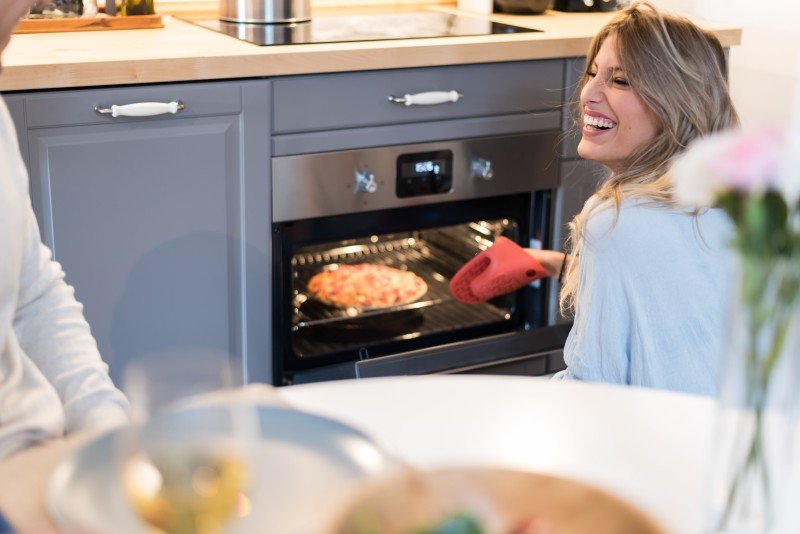 Be sure to keep children and other guests away from the stove when it is in use. The surface may be extremely hot. It is also recommended to use oven gloves to avoid touching the handles on the metal pan because they can be extremely hot. It is essential to shut off the stove immediately after use, as it may remain hot for a period of time. Follow the advice of the fire service and call 999 as soon as you can in the event that there is an incident of fire.